

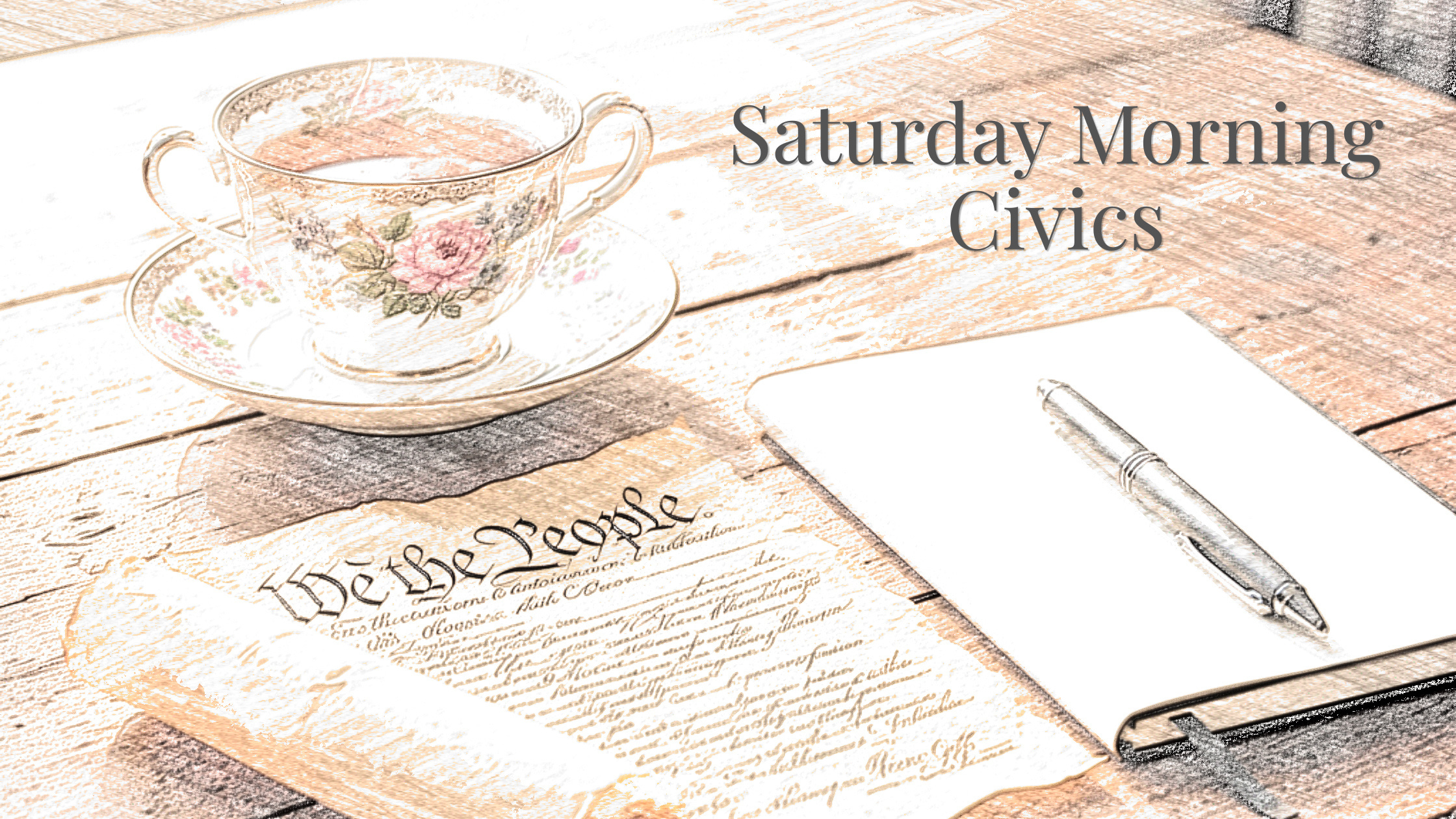
There is a curious habit among Americans.
We are a nation that loves opinions.
We hold them with enthusiasm.
We post them with confidence.
We defend them with the stamina of marathon runners and the fact-checking habits of someone who has just discovered the word “actually.”
And yet there is one small detail that rarely enters the conversation.
A surprising number of us are conducting these passionate civic debates without having read the instruction manual.
To be clear, this is not a criticism. Life is busy. Most of us are juggling work, family, bills, and whatever mysterious administrative tasks adulthood invents on a Tuesday afternoon. Civic literacy rarely appears on the daily to-do list.
And yet the system we live in quietly assumes that we know at least the outline of how it works.
Which is odd, when you think about it.
Because the instruction manual for the United States is not hidden in a government vault guarded by riddles and velvet ropes. It is not written in twelve volumes of legal code. It does not require a law degree or a ceremonial wig.
It is about 7,500 words long.
You could read it comfortably in the time it takes to watch half a movie or scroll through a moderately energetic comment thread.
It is called the Constitution.
Now, to be fair, most of us did meet it once. Somewhere around middle school it drifted past us wearing powdered wigs and speaking in dates. We memorized a few vocabulary words, circled a couple amendments, and then moved on to other academic priorities.
Around that same time, many of us also learned fascinating things like the structure of a cell and the square root of numbers we would never again encounter in the wild.
Curiously, we did not learn how to file taxes or balance a checkbook, but that is perhaps a discussion for another day.
The Constitution, meanwhile, quietly waited in the background.
Which is unfortunate, because it was never meant to be a museum artifact.
It is the rulebook for the national house we all live in.
And living in a house without knowing the rules can lead to some fascinating conversations.
Imagine a neighborhood where everyone passionately debates the HOA bylaws, but no one has actually read them.
One neighbor insists the treasurer controls the entire subdivision.
Another is convinced the landscaping committee has the authority to declare war.
Someone else believes the mailbox inspector holds absolute power over domestic and international affairs.
Meanwhile the bylaws are sitting quietly on the kitchen table.
The United States works a little like that sometimes.
The Constitution does not describe an all-powerful government that can manage every problem from the national capital like a particularly busy household manager.
In fact, it does something almost the opposite.
It creates a government with limited and specific powers, and then it divides those powers so thoroughly that no single group can get too comfortable with them.
Which is why the government has three branches.
Not because the founders loved organizational charts.
The founders had recently dealt with a king and found the experience… educational.
So they built a system where power is divided.
Congress writes the laws.
The President carries them out.
The courts interpret what those laws mean and whether they follow the Constitution.
It is less like a pyramid and more like three coworkers who have been instructed to check each other’s work indefinitely.
Congress debates and passes laws—often slowly, occasionally dramatically, and sometimes while the rest of the country watches with the same fascination reserved for weather systems forming offshore.
The executive branch runs the day-to-day machinery of government and enforces those laws.
The courts step in when questions arise about what the law actually means, or whether it fits within the boundaries of the Constitution.
Each branch has tools to keep the others in check.
Presidents can veto laws.
Congress can override vetoes.
Courts can strike down laws that violate the Constitution.
It is not always graceful.
But grace was never the goal.
The goal was balance.
History had already demonstrated something the founders took seriously: power, left unsupervised, tends to grow like a houseplant that has been given too much sunlight and absolutely no boundaries.
So they built a system where power constantly bumps into guardrails.
They also built something else that quietly shapes American life every day.
The Bill of Rights.
Contrary to popular belief, the Bill of Rights is not a list of privileges the government kindly hands out when everyone behaves.
It is a list of things the government is not allowed to do to you.
Take the First Amendment, for example.
It is one of the most quoted sentences in American life and possibly one of the most misunderstood.
People invoke it during workplace disagreements, grocery store debates, social media arguments, and occasionally when someone politely asks them not to shout during a city council meeting.
But the First Amendment does something very specific.
It restricts the government.
The key phrase appears right at the beginning:
“Congress shall make no law…”
The amendment is not a guarantee that everyone will like what you say.
It is a rule telling the government that it cannot punish you simply for saying it, with a few narrow exceptions involving threats, violence, or immediate chaos.
Which means the American tradition of loudly disagreeing with one another is not a malfunction.
It is the system working exactly as designed.
Freedom of speech, it turns out, includes the freedom to say things that other people find frustrating, irritating, misguided, or spectacularly incorrect.
The Constitution’s answer to speech you dislike is not government silence.
It is more speech.
Preferably thoughtful speech.
Occasionally sarcastic speech.
But speech nonetheless.
Another idea quietly woven through the Constitution is something called federalism, which sounds complicated but is really just a practical arrangement about who handles what.
Some powers belong to the national government.
Some belong to the states.
And some belong to the people themselves.
The Constitution gives the federal government certain enumerated responsibilities—things like national defense, foreign policy, and regulating commerce between states.
But it does not give the federal government unlimited authority over every corner of daily life.
That is why the Tenth Amendment gently reminds us that powers not given to the federal government remain with the states or the people.
Which is why laws can look different depending on where you live.
Education policies differ.
Taxes differ.
Local regulations differ.
It can feel a little messy at times.
But the founders were not trying to create a perfectly uniform machine.
They were building a union of states that shared national governance while still keeping much of life close to home.
Understanding that simple division of responsibility answers a surprising number of political arguments.
Sometimes the real question is not “Should the government do this?”
It is “Which level of government is actually responsible for this in the first place?”
And occasionally the answer is: neither.
Finally, there is one more distinction that helps keep civic conversations grounded.
The difference between rights, laws, and preferences.
A right is something protected from government interference.
A law is a rule created through the legislative process that people are required to follow.
A preference is something we believe society should do because it seems wise, kind, polite, or morally good.
All three matter.
But they are not interchangeable.
Not every disagreement is a constitutional crisis.
Sometimes it is a policy debate.
Sometimes it is a cultural question.
And sometimes it is simply two people discovering that they view the world from very different front porches.
The Constitution does not eliminate those disagreements.
What it does—quietly and remarkably—is protect our ability to have them.
Which brings us back to the small but slightly inconvenient requirement of a self-governing nation.
The “self” part.
A republic works best when the people living in it know, at minimum, the shape of the system they are operating.
You do not need to memorize court cases.
You do not need to quote James Madison at dinner parties.
You certainly do not need to develop strong feelings about powdered wigs.
But it helps—just a little—if we occasionally read the house rules.
They are shorter than most social media arguments.
And considerably more useful.
Part of the Saturday Morning Civics series.
Quietly Becoming Jess is a free publication and 100% reader supported.
If you find value in this writing space and would like to support my work with a donation—of any amount—it is deeply appreciated.
My full-time work is wife, mother, and home educator. The paycheck is hugs and kisses—the very best kind.
Your support helps make it possible for me to continue researching and writing, my small way of contributing thoughtful conversation to the world we’re all trying to understand together.
Welcome, dear Reader. Thank you for being here. My work is free and reader supported. If you would like to receive new posts and support my work, please consider subscribing.