

From a mother, language lover, and former “system” teacher who has taught multiple children to read… and had to look them in the eye while doing it. The English language is a hot mess.. on fire.
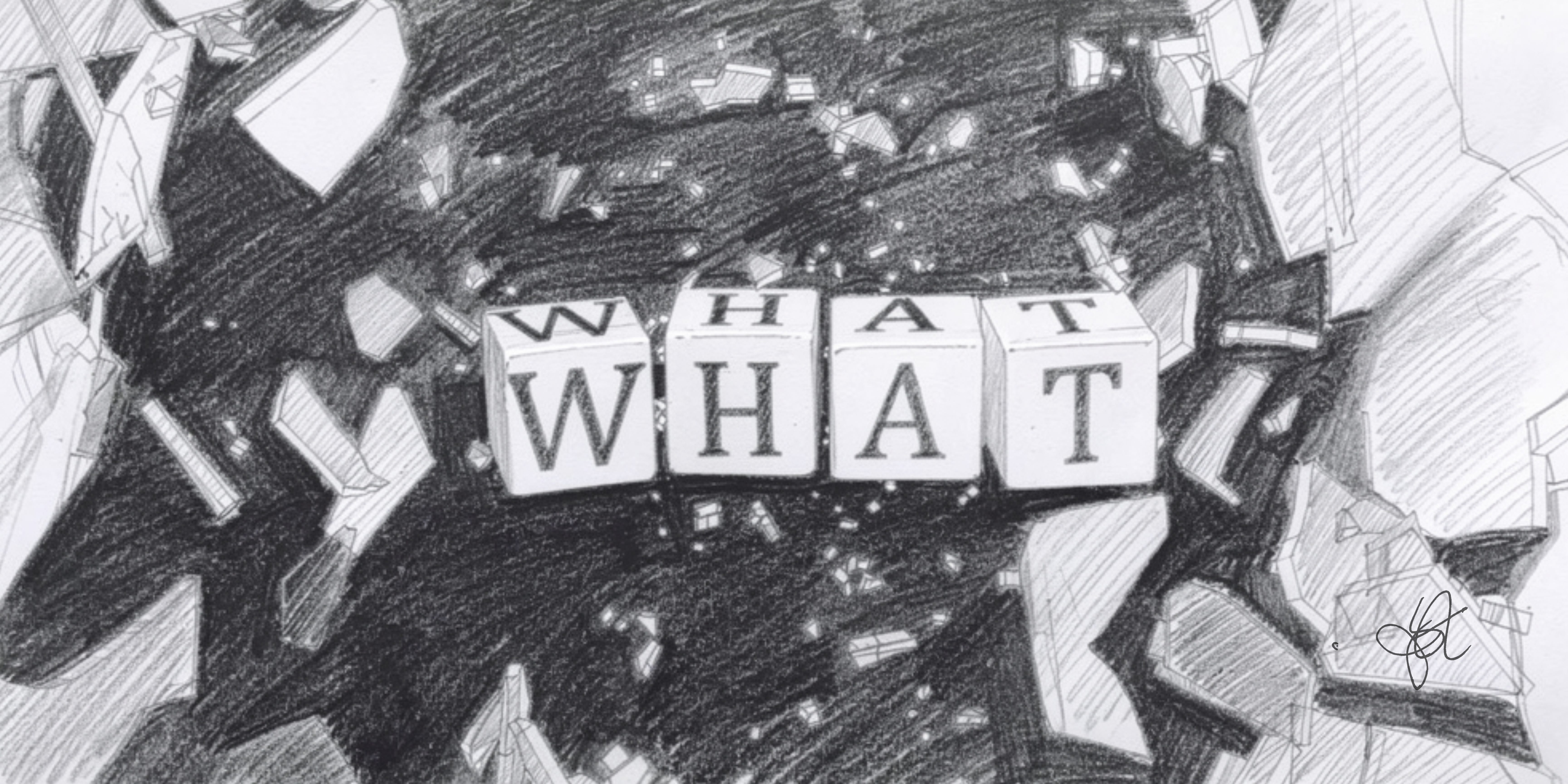
I have taught more than one child how to read.
That sounds peaceful. Like I’m sitting in a sunlit corner with a stack of books and a mug of coffee, raising little scholars.
No.
It looks more like sitting across from a five-year-old who is doing exactly what you told them to do… and watching their face fall when it doesn’t work.
Here’s the truth some of us say out loud, and some are afraid to address:
The English language does not play fair.
Ah, but children…a root in wisdom often discarded. Children see it immediately. You probably did, too, once upon a time.
Every single one of my babies and students has asked some version of the same question:
“Why is it like this?”
Not whining or complaining. Just asking an honest question. And also sometimes asking “did you notice if you say the word ‘bear’ over and over, it starts to feel weird?!”
And I’ve sat there, fully grown adult, responsible for their education, and had no honest answer that didn’t sound ridiculous when spoken out loud.
Because they’re right. It doesn’t make sense.
The other day, my son asked me a simple question:
“What’s a bill?”
And I opened my mouth… and immediately regretted it.
“Well… it depends.”
There’s a dollar bill. A duck bill. The bill of a hat. The bill that shows up in the mail that Momma and Daddy have to pay. And then there are bills that turn into laws. Sometimes.
I just sat there for a second after I said it. Because what kind of answer is that?
A child asks for meaning, and I hand him a pile of unrelated definitions and call it language.
We tell them:
“Learn your sounds. Sound it out. You can do this.”
And they believe us. Of course they do. Children still trust that the world is built on something solid. They trust us and every single thing we say to them.
Then they meet words like:
Tough. Though. Through. Cough.
Same letters.
Four completely different outcomes.
And suddenly you’re explaining to a child who just learned phonics that the rules they worked so hard to understand… don’t actually apply when it matters. So, then we go into dialogue about “some words just don’t play by the rules”…. and know they’ll just have to memorize the rule breakers.
Because i before e, except after c…. but, in this case, it doesn’t follow the rule… and sometimes sneaky e isn’t sneaky…and sometimes two vowels don’t actually walk together…
Sigh.
You can see the moment it hits them.
Not confusion. Betrayal.
Then come the silent letters.
“Knight.” “Write.” “Island.” And at some point, you hear yourself say: “That letter is just… there.” Just there. Not working. Not helping. Not even pretending to contribute. Just sitting in the word like it pays rent.
But, you explain it in a weird house of mirrors type of way, because you learned in a house of mirrors that English language rules are sometimes… rules. And sometimes not.
And you catch yourself mid-sentence thinking, this is absurd.
Because it is.
So we pivot.
We stop saying “sound it out,” and we start saying:
“Just remember it.”
Sight words. Memorize it. Recognize it. Don’t question it.
Which is a strange thing to call reading.
Because that’s not decoding.
That’s coping.
Meanwhile, my kids who are learning other languages look at me like I’ve lost my mind.
Because in these other languages, once you learn the sounds… you can read.
No tricks. No ambush. No guessing games dressed up as literacy. Just…consistency.
Imagine handing a child a system that keeps its word. I have to leave that sentence alone, or less I will off on a whole ‘nother tangent.
The deeper I got into this, the clearer it became: English isn’t one language. It’s a pile. Quite literally.
Layers of history stacked on top of each other with very little concern for the poor soul who would eventually have to learn it. (Just ask any ESOL teacher… God, be with them.)
Germanic roots. French influence. Latin trying to clean things up after the fact. Scholars adding letters because they thought words should look more “educated.”
And here’s the thing about Latin — it actually plays by the rules. It’s consistent. Phonetically predictable. The language that English supposedly borrowed from for respectability turned out to have far more integrity than English ever gave it credit for.
Which is part of why, when I looked at the chaos of English and started asking why, I didn’t decide to avoid Latin until middle school.
I decided to run straight toward it.
If my children were going to understand why English is the way it is — why the spelling is frozen in one century while the pronunciation kept moving, why half our vocabulary looks one way and sounds another — they needed to see the foundation. Not as an abstraction. As a living thing.
Latin isn’t a detour. It’s an explanation. Thank you, Sweet Jesus.
And before anyone comforts themselves with, “Well, maybe some kids just struggle…”
No.
I have watched bright, intuitive, pattern-seeking children slam straight into this wall.
Children who can reason, build, question, and connect ideas faster than most adults.
And they still hit words like:
“Queue.” “Colonel.” “Definitely.”
And fail.
Not because they’re incapable. Because the English language system is grossly inconsistent.
Then, just when you think you’ve survived spelling, English quietly introduces another level:
Phrasal verbs.
Look up. Look into. Look over.
Same words. Completely different meanings. No clear logic. No reliable pattern. Just exposure and repetition until it sticks… or it doesn’t.
So here’s where I’ve landed after walking multiple children through this: English is not difficult because children struggle.
Children struggle because English is difficult.
There’s a difference.
Here’s the part that stops me, in order to marvel at the beautiful human brain and it’s plasticity. Because despite all of it… they learn. They wrestle with it. They question it. They get frustrated, and then they try again.
And somewhere in the middle of all that mess, something clicks.
Not because the system suddenly becomes clean. But because they adapt. Their brains build pathways where none were clearly given. They do the work anyway.
I’ve watched one of my children spend twenty minutes on a single word — tracing it back, asking questions, refusing to just accept “that’s how it is.” And eventually, something in her face shifted. Not relief. Something more like recognition. Like she’d caught the language doing something it thought she wouldn’t notice. But, she noticed.
So if your child is sitting there, staring at a word that refuses to behave (and deserves detention or suspension)… and asking questions you don’t have neat answers for…
Good.
Let them ask.
Let them push back.
Let them notice the cracks.
Because we don’t need to train children blind mastery of a broken system.
The goal, simply, is this: To raise a child who can look at something that doesn’t make sense… and have the courage to say so.
And then decide what to do with it anyway.
I write through the lens of a home educating mother. But, I once was part of the public, then the private education system. There’s not much different in private or public.. it’s the same system but takes thousands from your pocket, to make you feel better about your child’s surroundings. And that is usually, largely, false. I do not write to make an attack on teachers… the ones who truly give their life in service to educating children live a life akin to a mother of a newborn. Late hours. Sleepless nights. And no, teachers, in fact, do not receive a summer “break”. I have hurt and alienated former colleagues by what I write. These are the ones in the trenches, the greatest of educators who lose sleep over your child, trapped within a system that is utterly and grossly broken. They are my heroes. They, and your child, deserve more than the absurd box of public education. This is why I write.
Share this with a teacher, or a homeschooling parent you love, please. It is not easy, but it is a journey of pure love.